Project Overview
Background
Rise in number of vehicles, loss of parking spaces and development of smart cities
Global parking management to grow by 12.1% (2030)
Client Pain
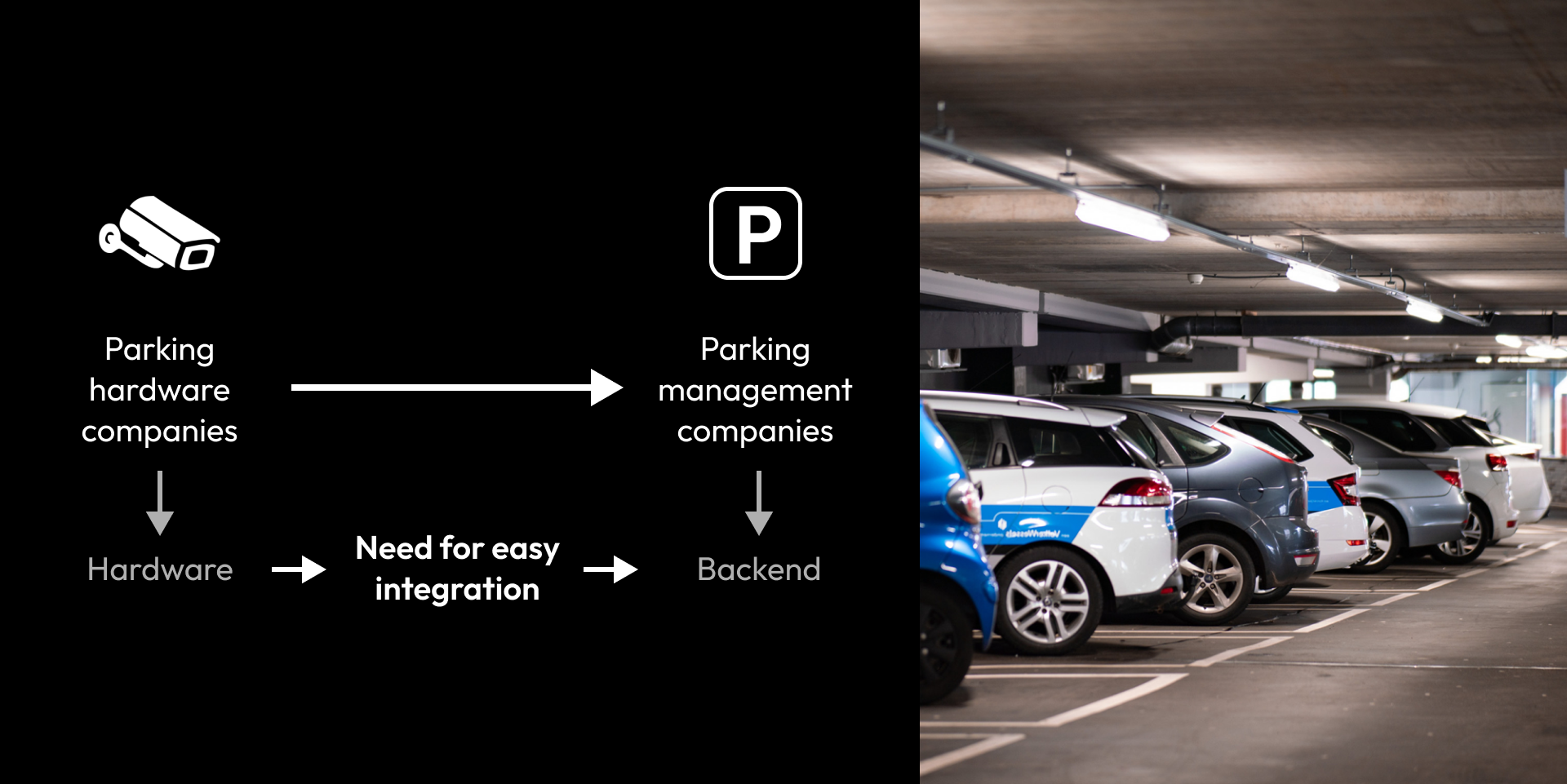
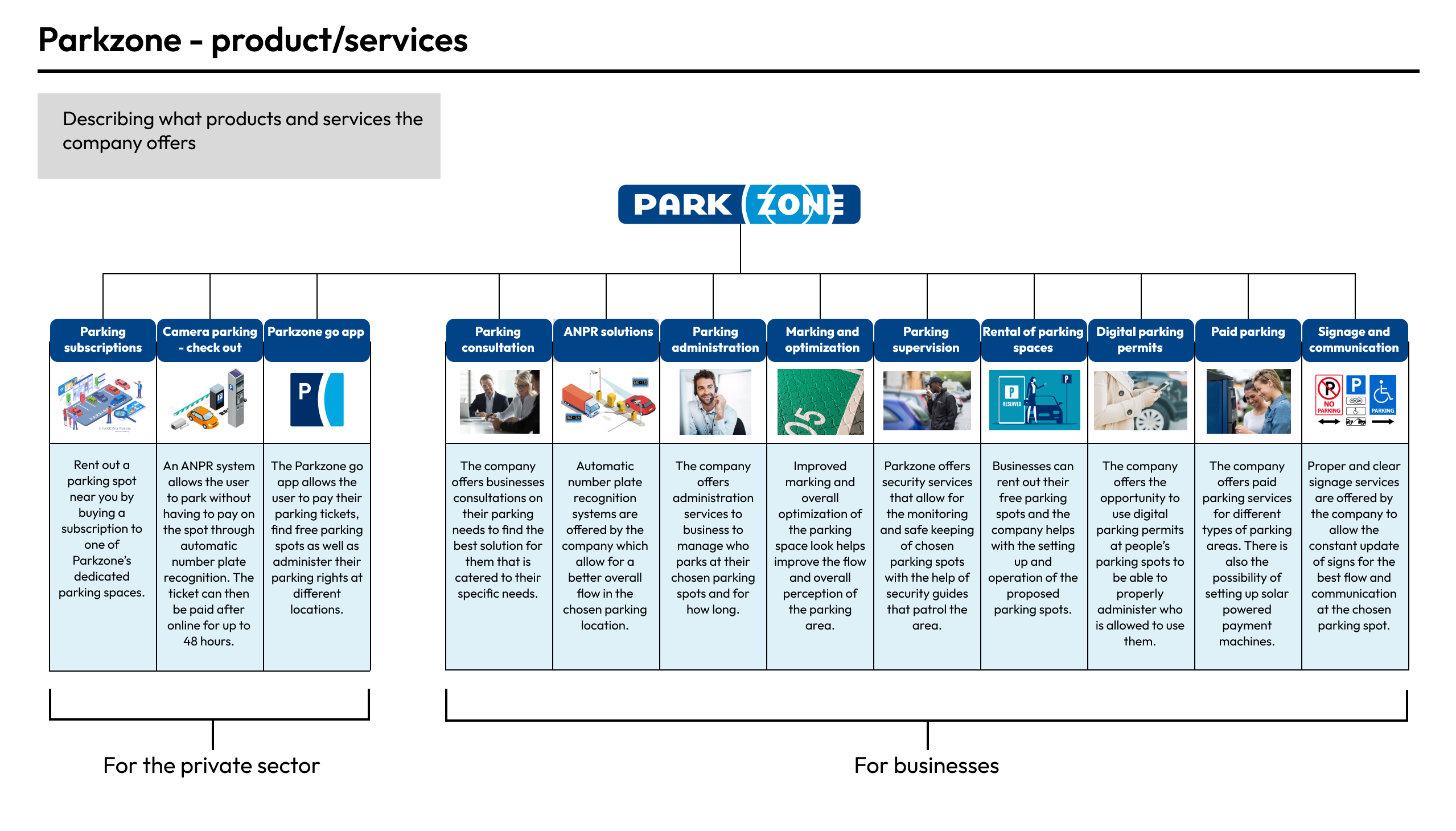
ParkZone already offers ANPR cameras, parking subscriptions and EV-related services – but they live in separate systems.
Design Challenge
How might we turn ParkZone’s hardware and services into one coherent experience for drivers and parking operators?
Solution overview
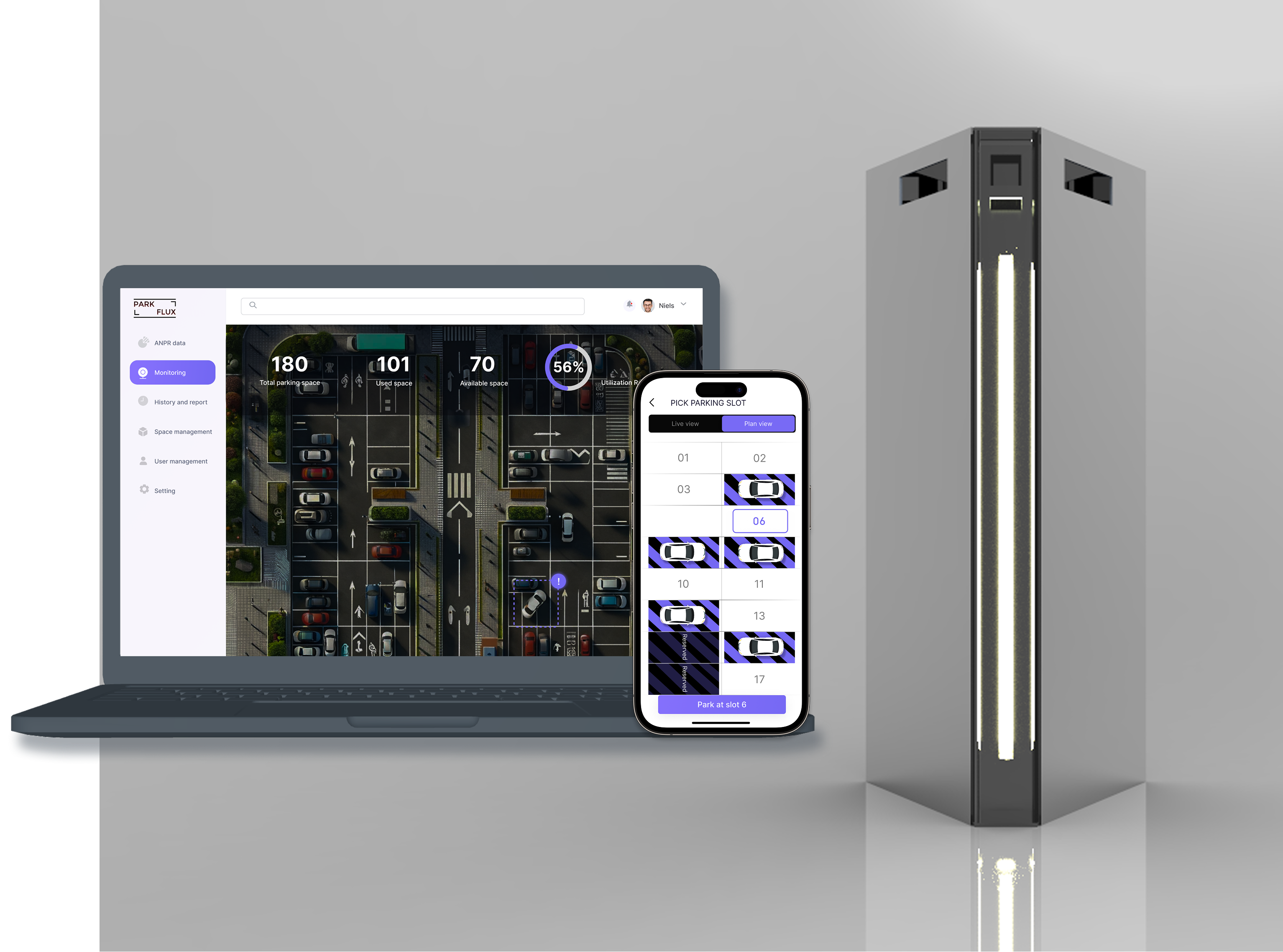
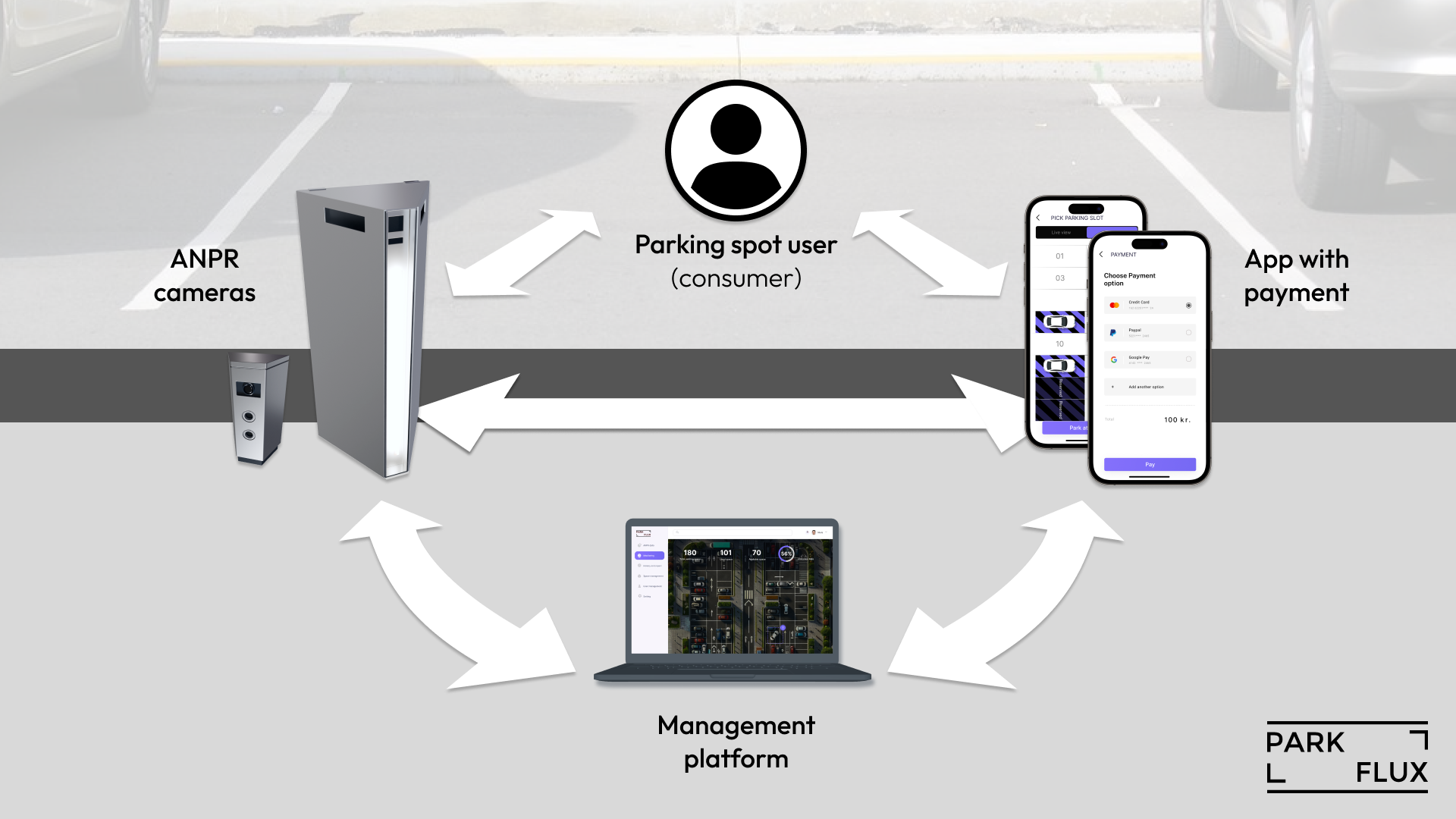
The ParkFlux ecosystem
- Smart pillar – ANPR cameras, motion detection and LED feedback to track each parking spot
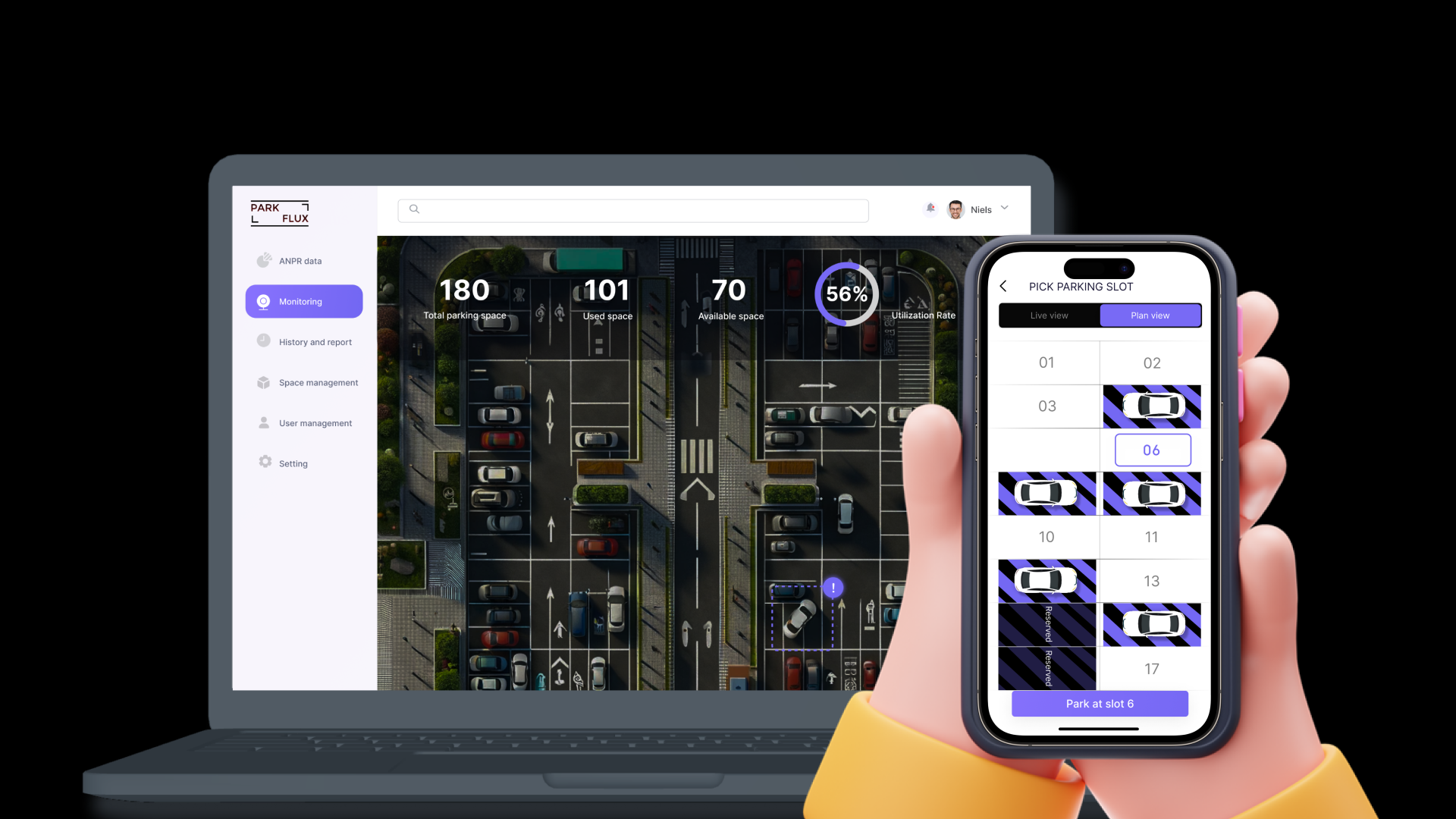
- Owner dashboard – Web platform to see occupancy, set rules and export data
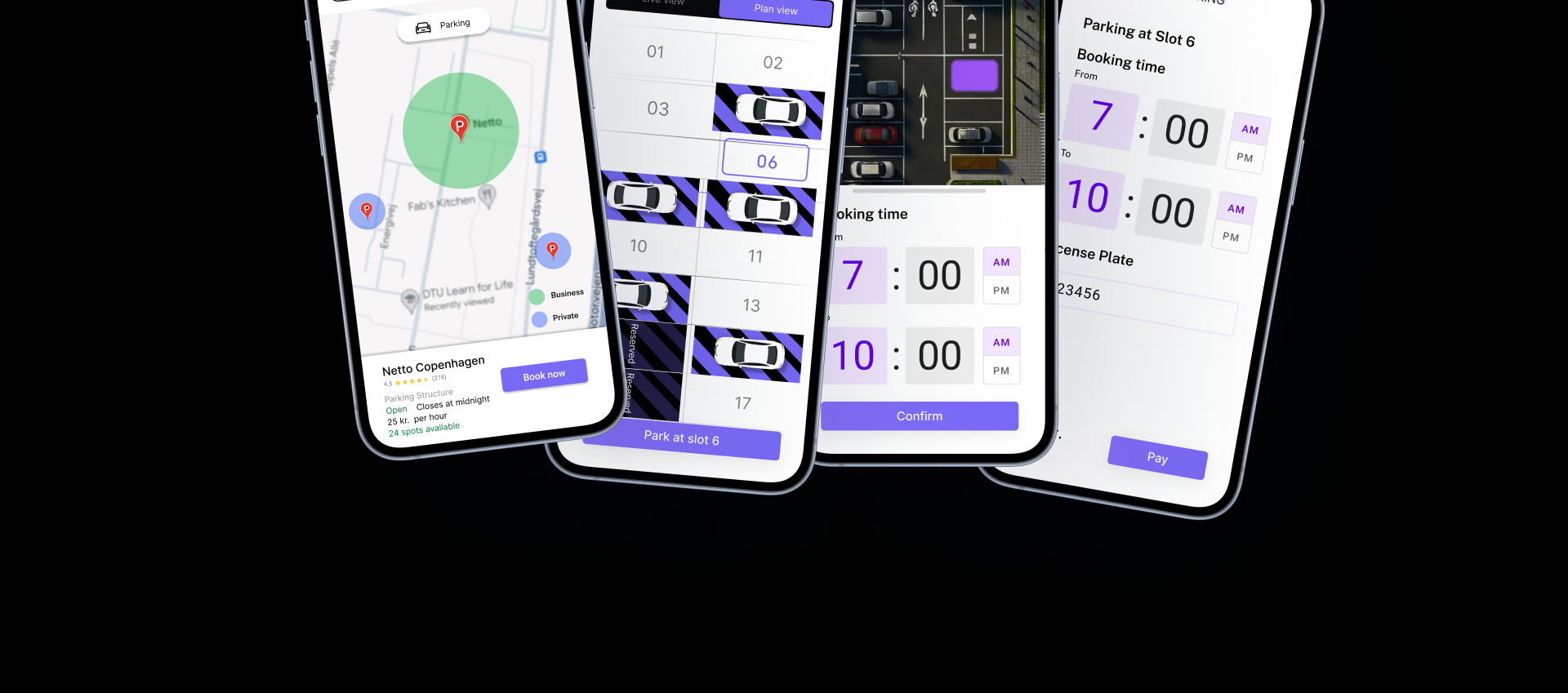
- Driver app – Mobile app to guide drivers to a spot and handle access and payment
My contribution
- Do some market research on the current parking market
- Define the main flows for the owner dashboard and driver app (from arriving at a gate to leaving a spot)
- Turned a hardware-driven idea into a service and UX concept
- Support the team in structuring the pitch deck so that the UX story connects to the business model and roadmap
Process
Research & insights
The team interviewed ParkZone’s business lead to understand their current solution and where they see opportunities.
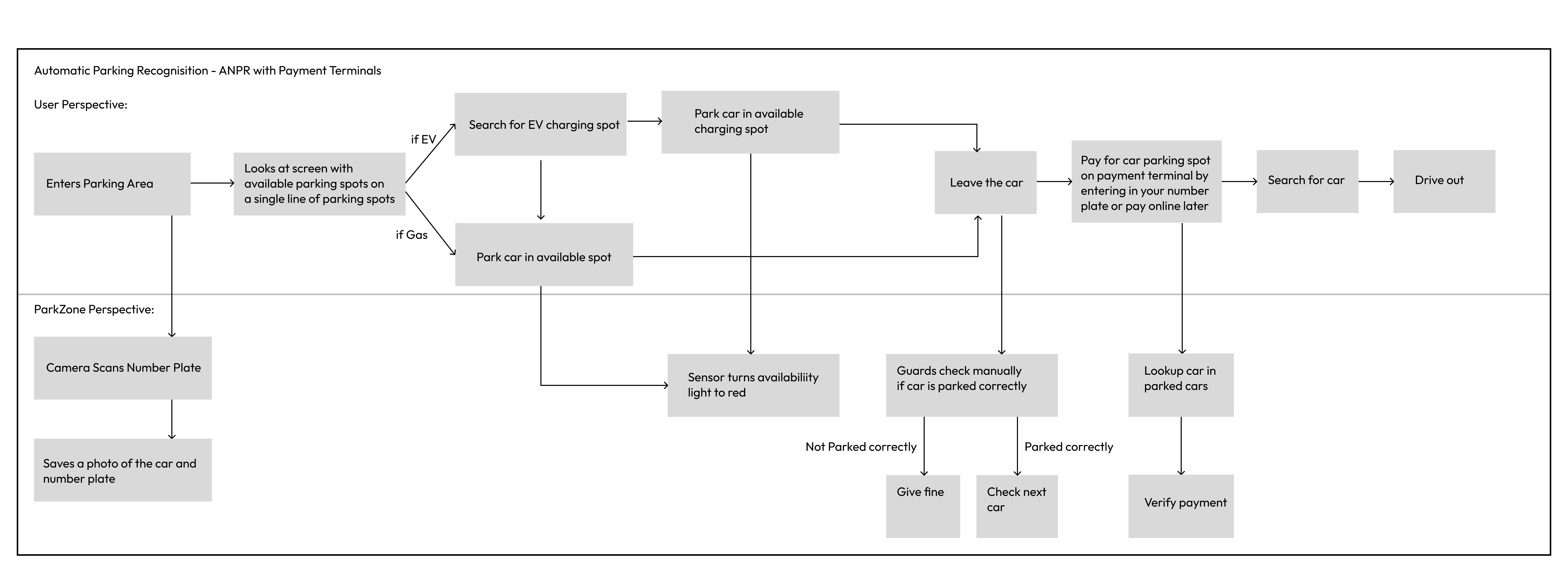
Current User Flow
The team mapped the current end-to-end journey for a driver and the parking company.
Pain points:
- Drivers struggle to find a free EV charging spot and remember where they parked
- Guards manually check illegal parking and issue fines – this is slow and inconsistent
- Data from ANPR cameras is not fully used to improve operations
These maps helped me identify where a digital platform could improve the experience for both sides.
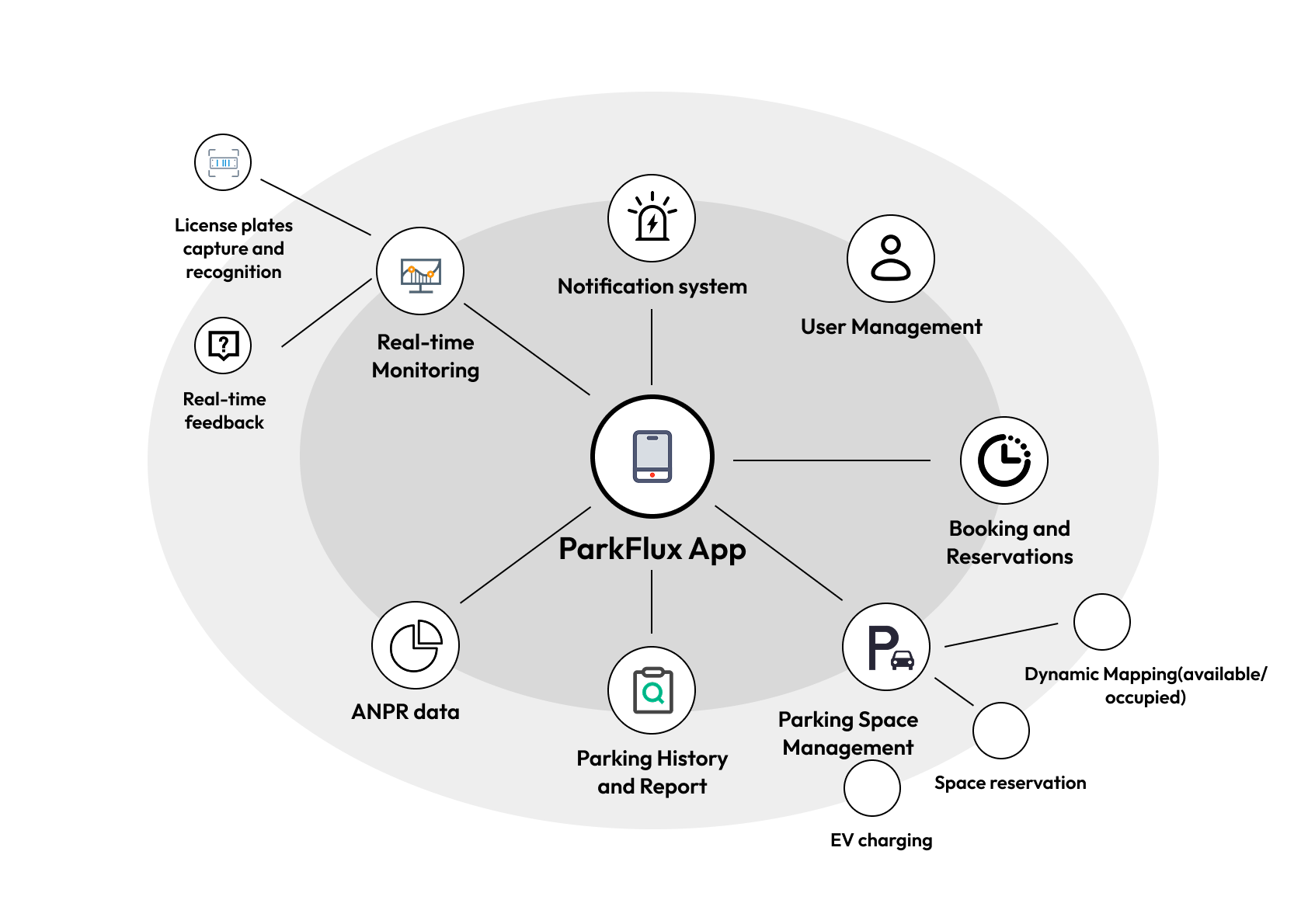
Defining the system & functionalities
Based on the journey and system map, I defined the core functions for the ParkFlux app and platform:
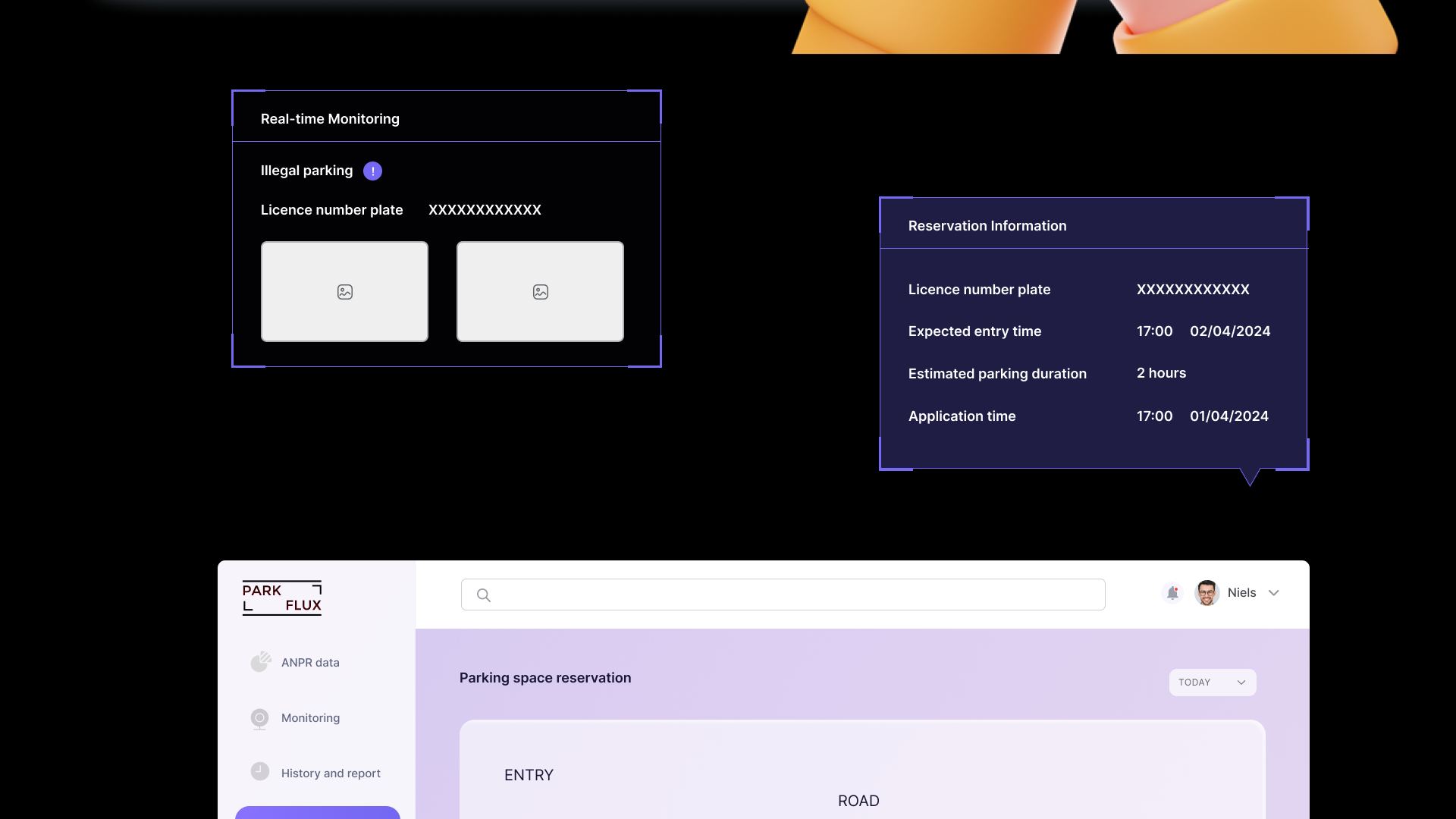
- Real-time monitoring & feedback
- Booking and reservations
- Space and EV-charging management
- ANPR-based history, reporting, and user management
This became the backbone for the dashboard and mobile flows
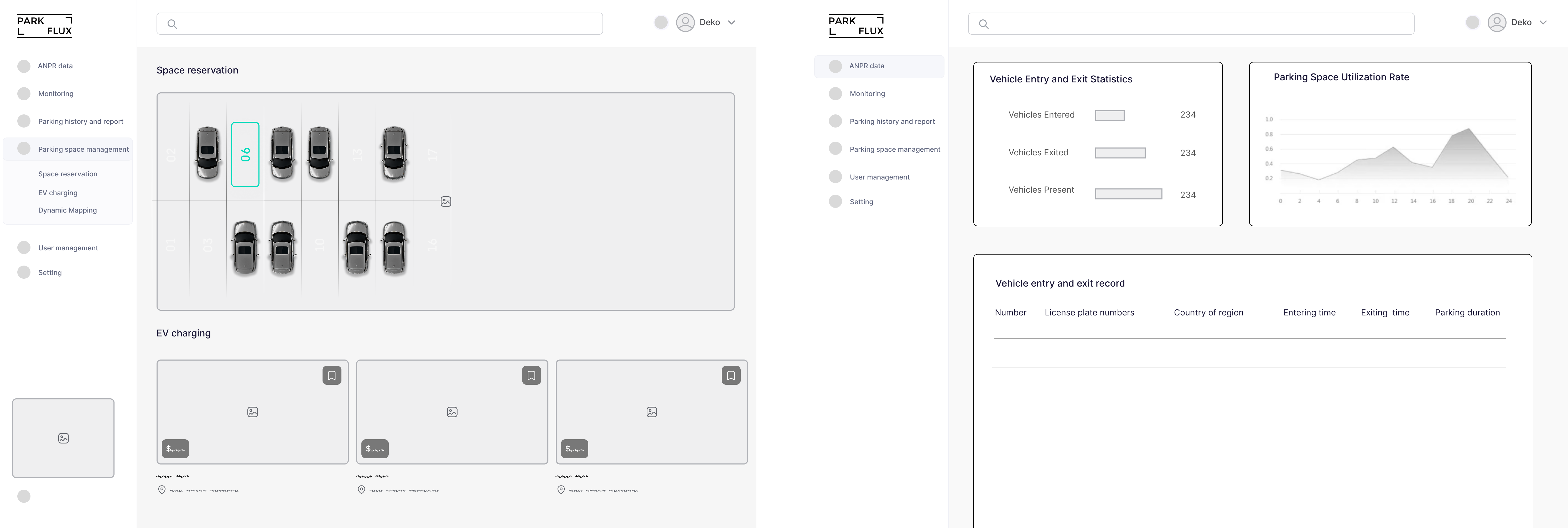
Low-fi / early dashboard sketches
I started with low-fidelity dashboard layouts to explore how to:
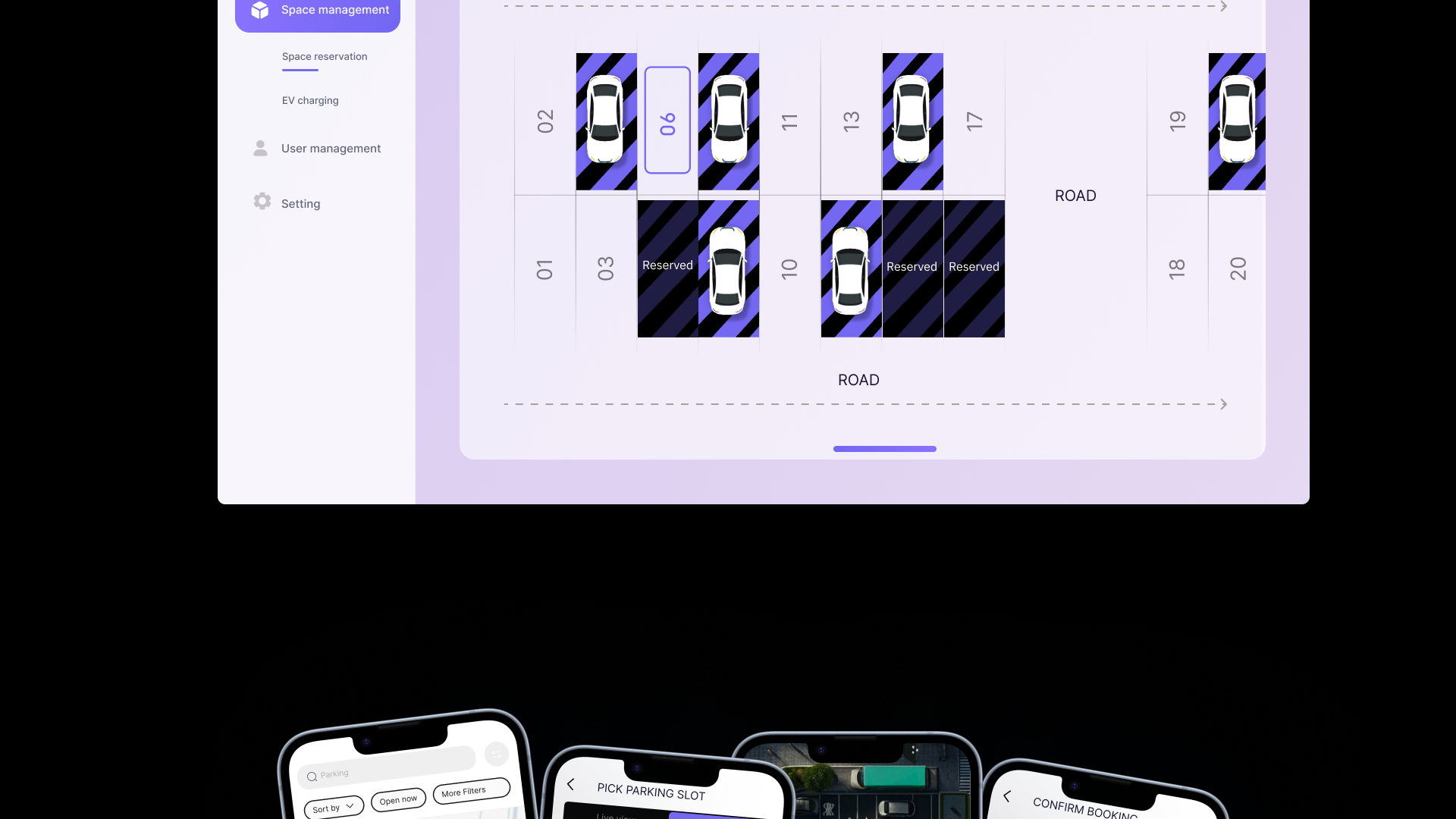
- Visualise space reservation and charger occupancy
- Keep the side navigation simple for different modules (data, history, space management, user management)
Dashboard & app design
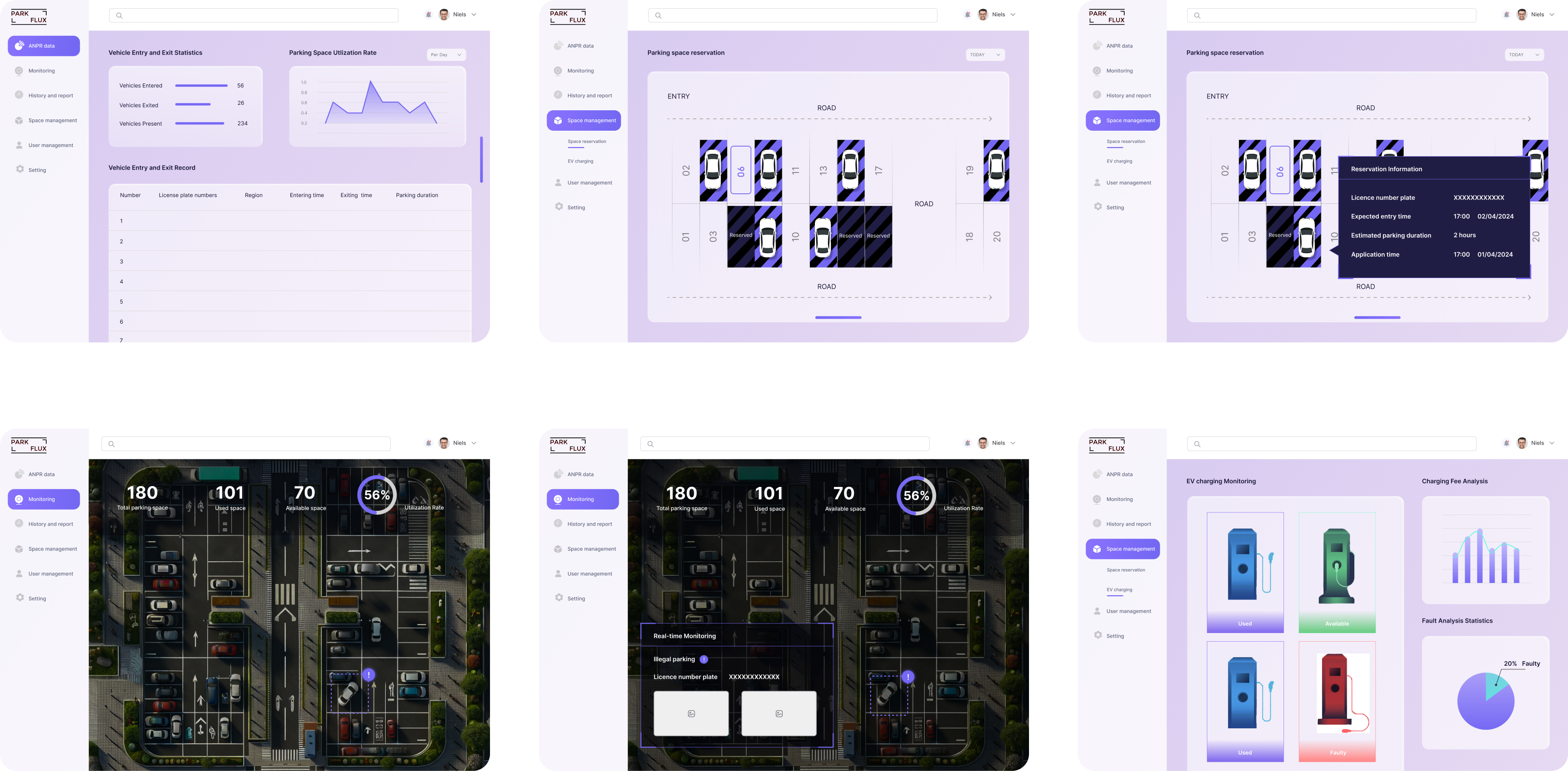
Final dashboard highlights:
- A map-like grid for a quick overview of free, occupied, and reserved spots
- Separate cards for EV chargers, showing status and power use
- A reporting view that aggregates ANPR data (entries, exits, fines) for business decisions
Mobile app Design
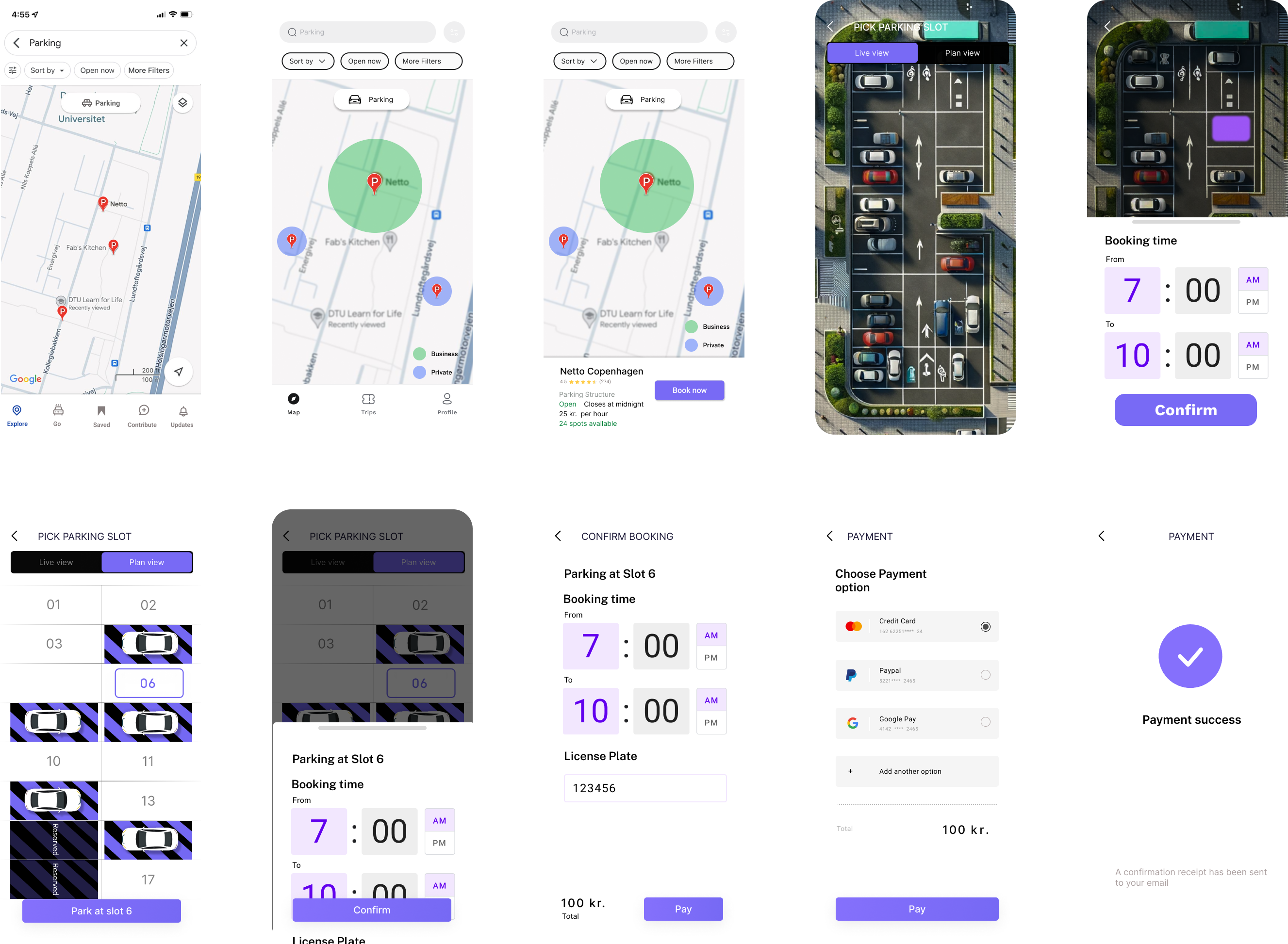
On the driver side, I sketched a simple app concept:
- Reserve a charger through the company or a private owner
- Get guided back to your car after charging(This part is still an early concept and will be refined in future iterations.)
What I learned
How to connect business models, hardware constraints and UX in one conceptHow to design for two user groups at the same time: drivers and parking operatorsHow to communicate a complex system clearly in a short pitch and a visual dashboard