Problem
Background
“Many companies struggle to balance employees’ well-being and business performance.”
Problem
- People at work are languishing
- Well-being initiatives are not measured
- Not holistic (leaders are not involved in the well-being of the employees).
Opportunity
Employees need simple, engaging support.
HR needs clear data to guide decisions.
Research / Strategy
Assumption Testing
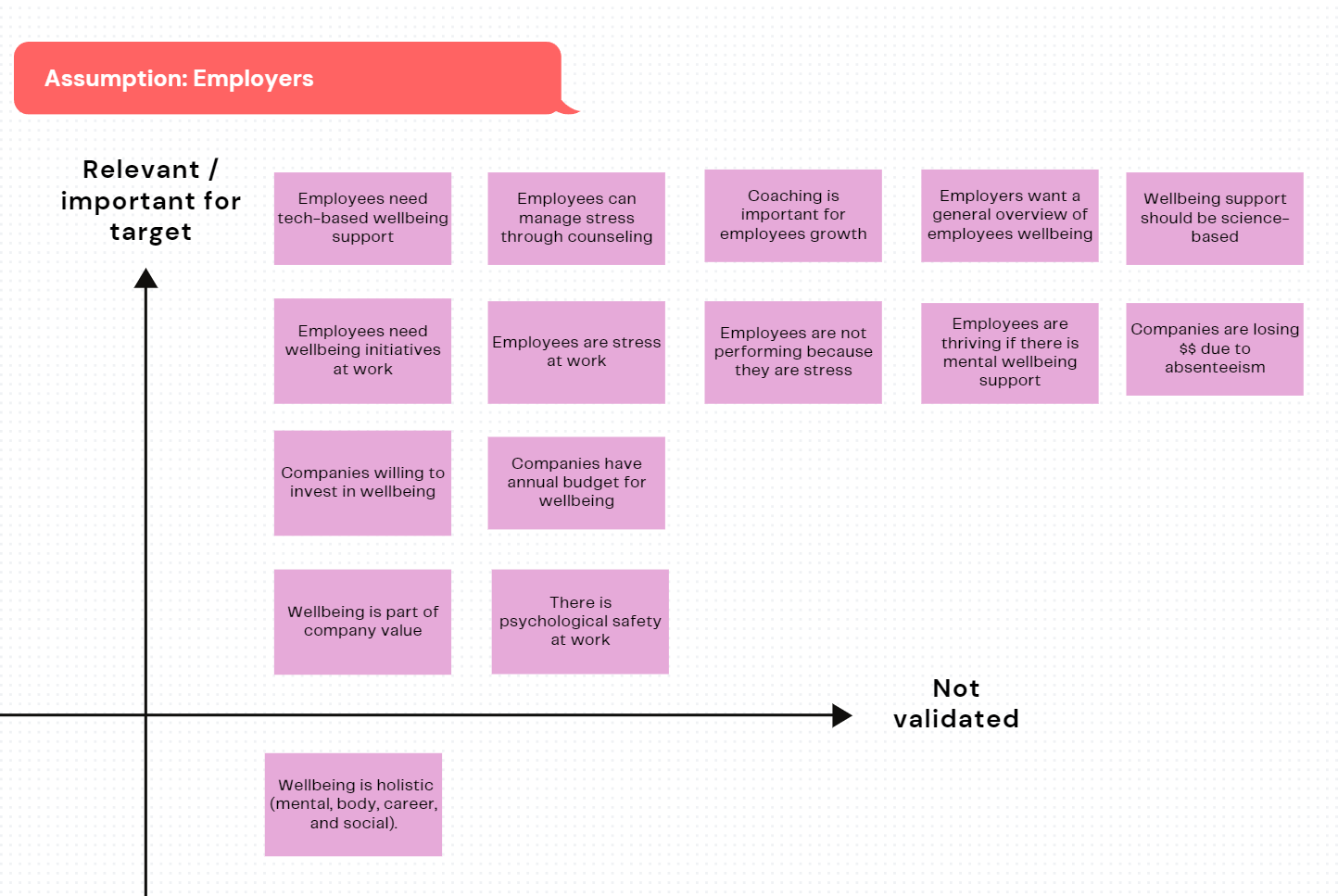
Assumption for Employers
This was a team activity.My role here was to join the discussion and turn the workshop results into a clearer, easy-to-read diagram.
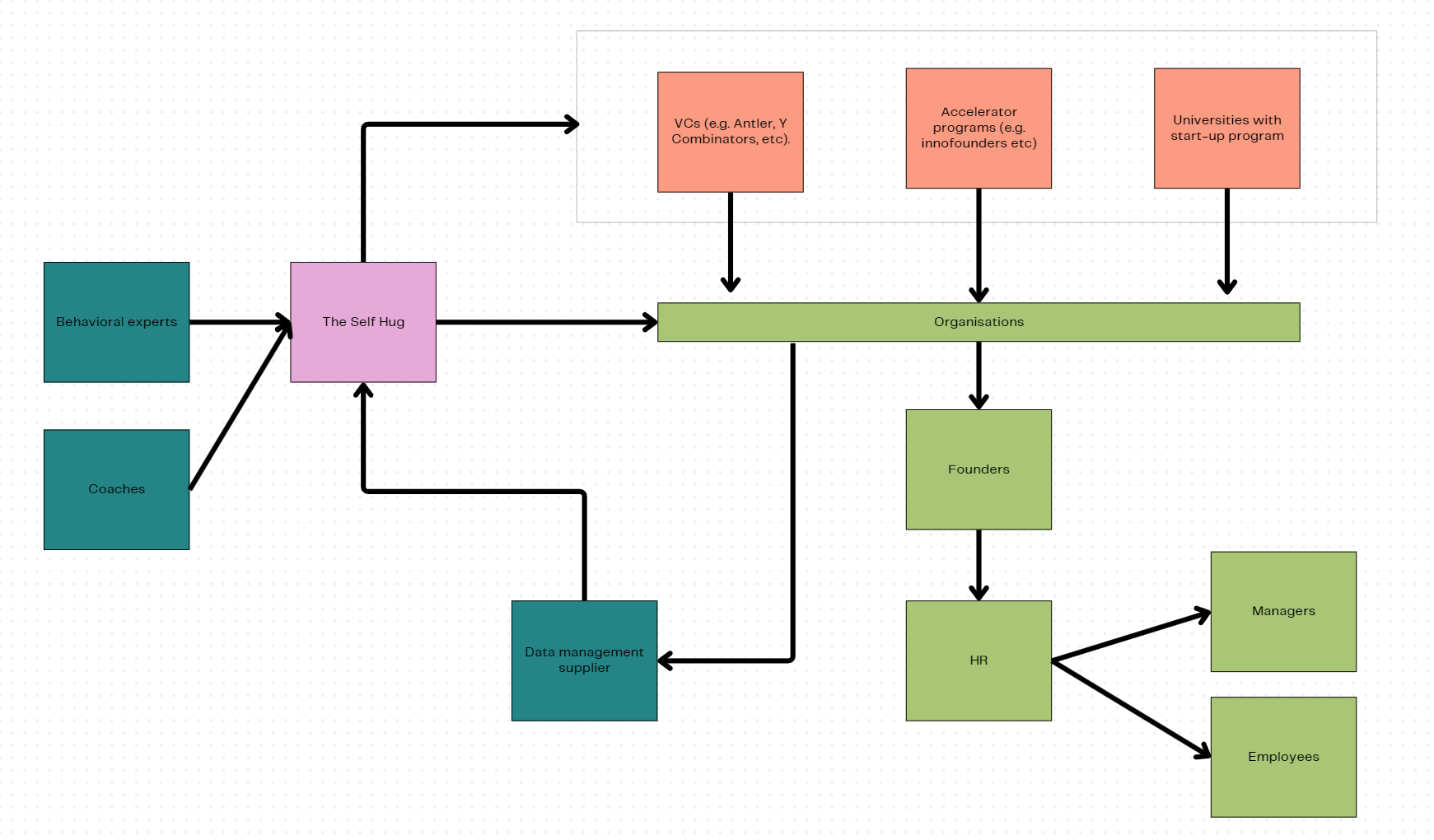
Stakeholder Map
This is a multi-sided platform: it needs to serve employees as well as HR/founders, and also involves coaches, data providers, investors, etc.
This affects how to separate the “employee app” and the “company dashboard” in information architecture.
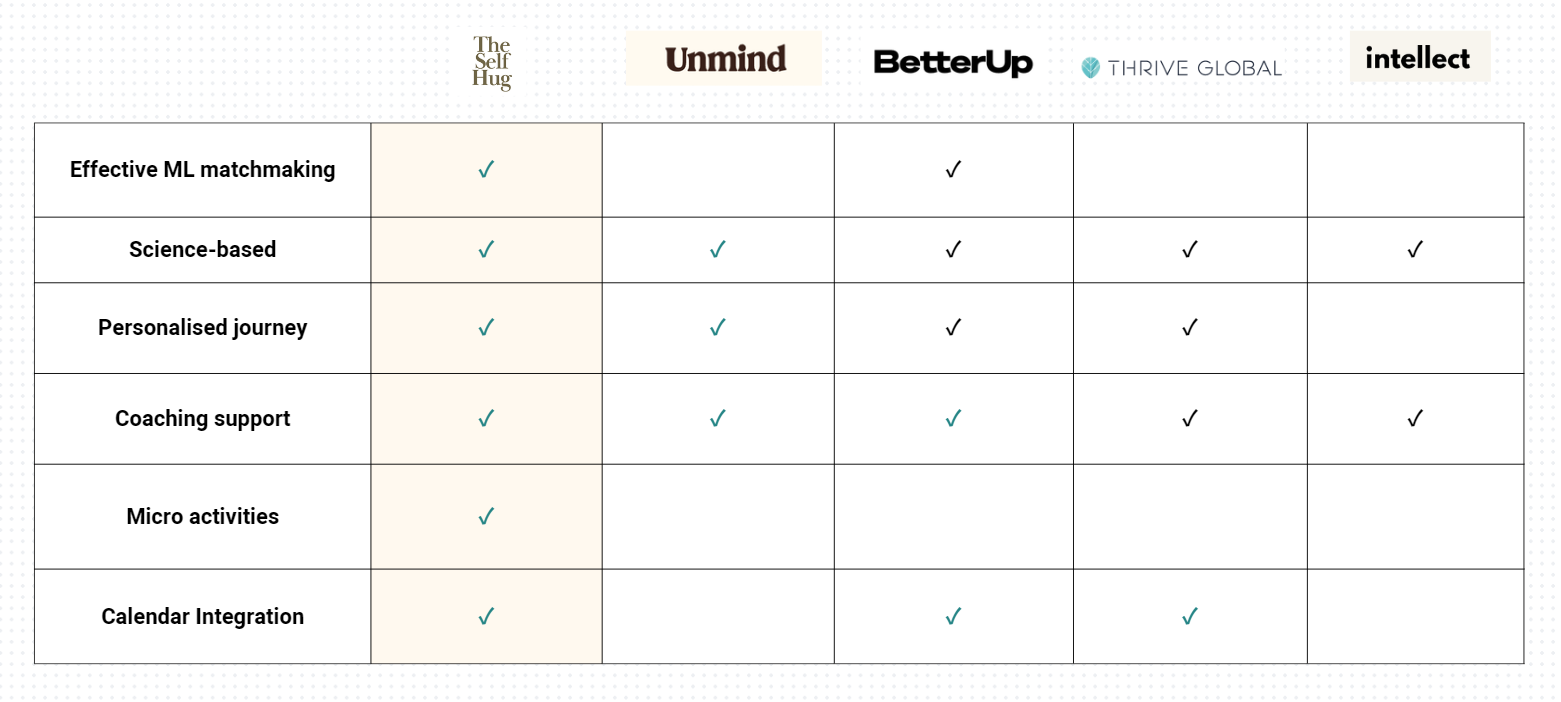
Competitive Analysis
- All major competitors highlight that they are “science-based”, so we also needed a science-content pillar.
- Their homepages almost always show data on “improved performance / reduced absenteeism” so decision-makers can see the ROI.
- Unmind differentiates through its community features, while Thrive focuses on a plugin/integration strategy.
Product positioning
UX Design: flow / IA / wireframe / UI
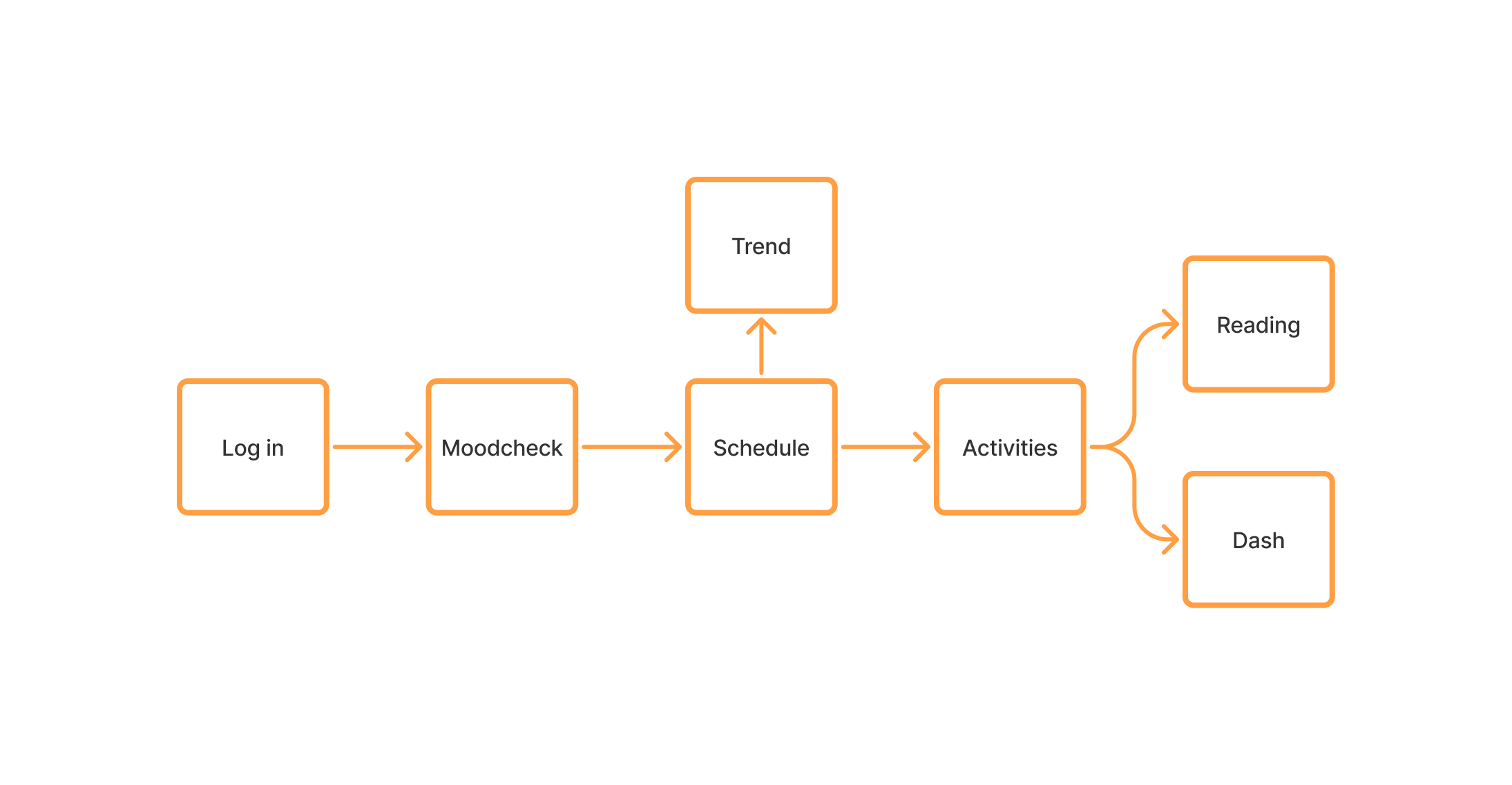
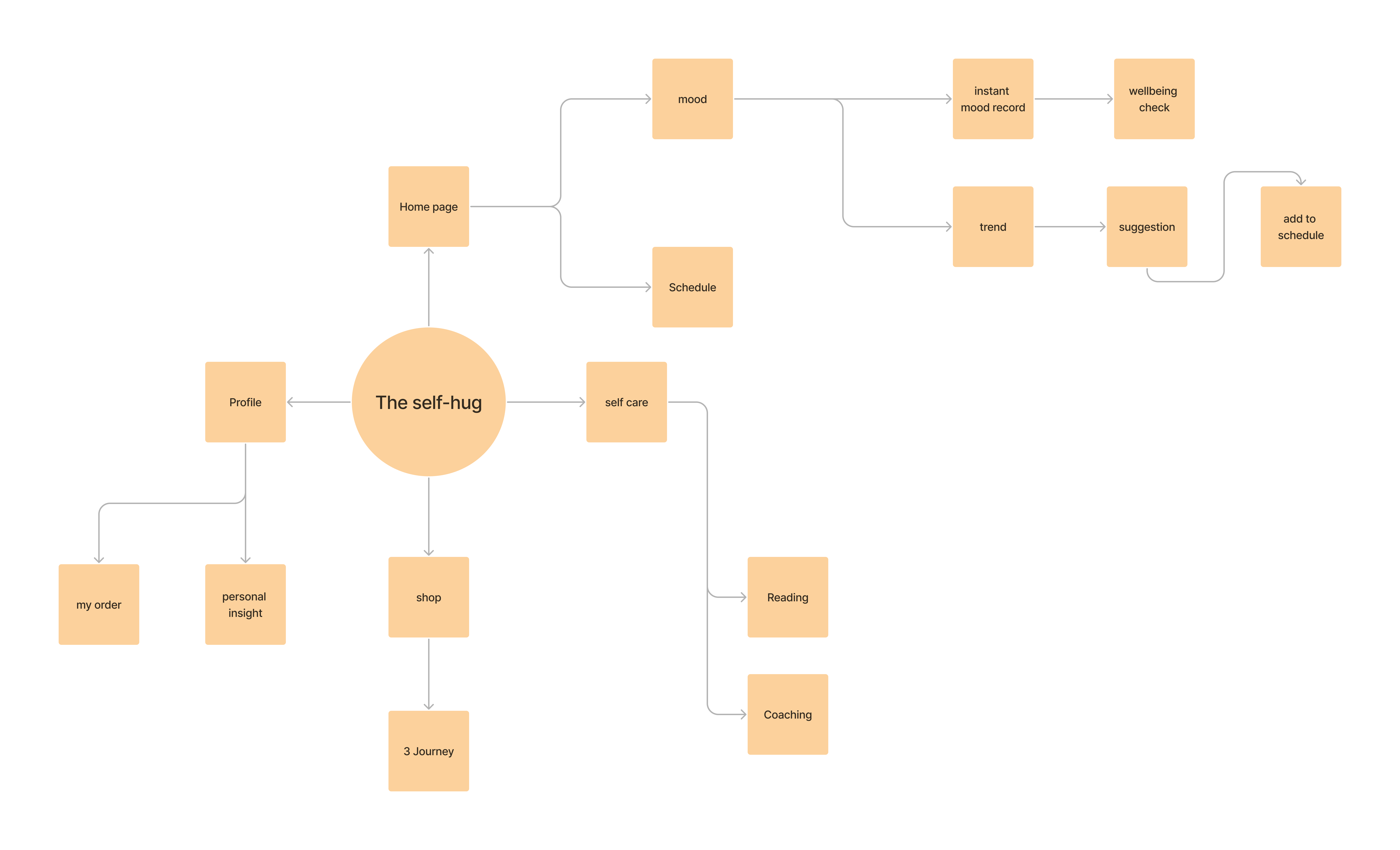
User flow & Information Architecture
User FlowInfomation Architecture
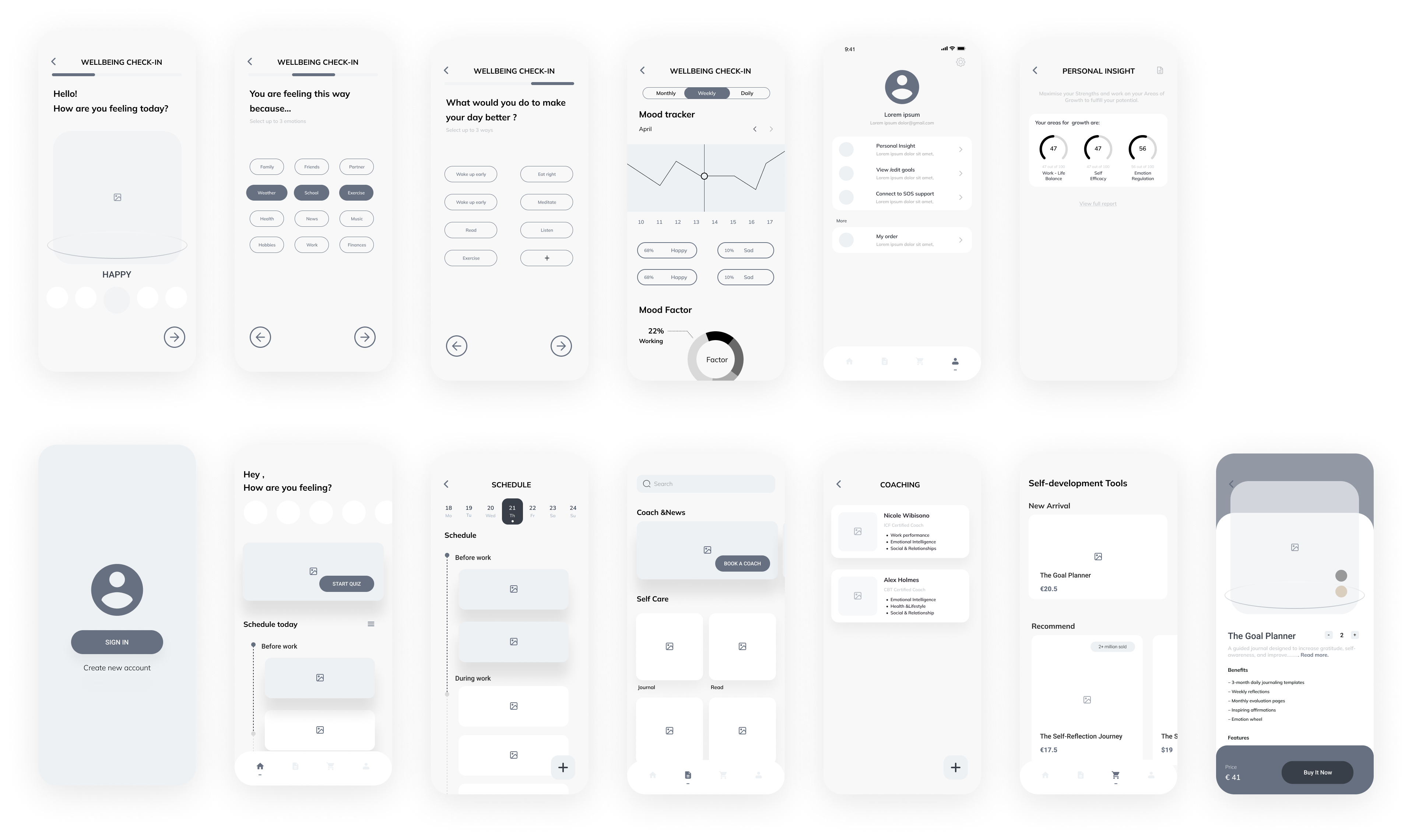
Wireframe
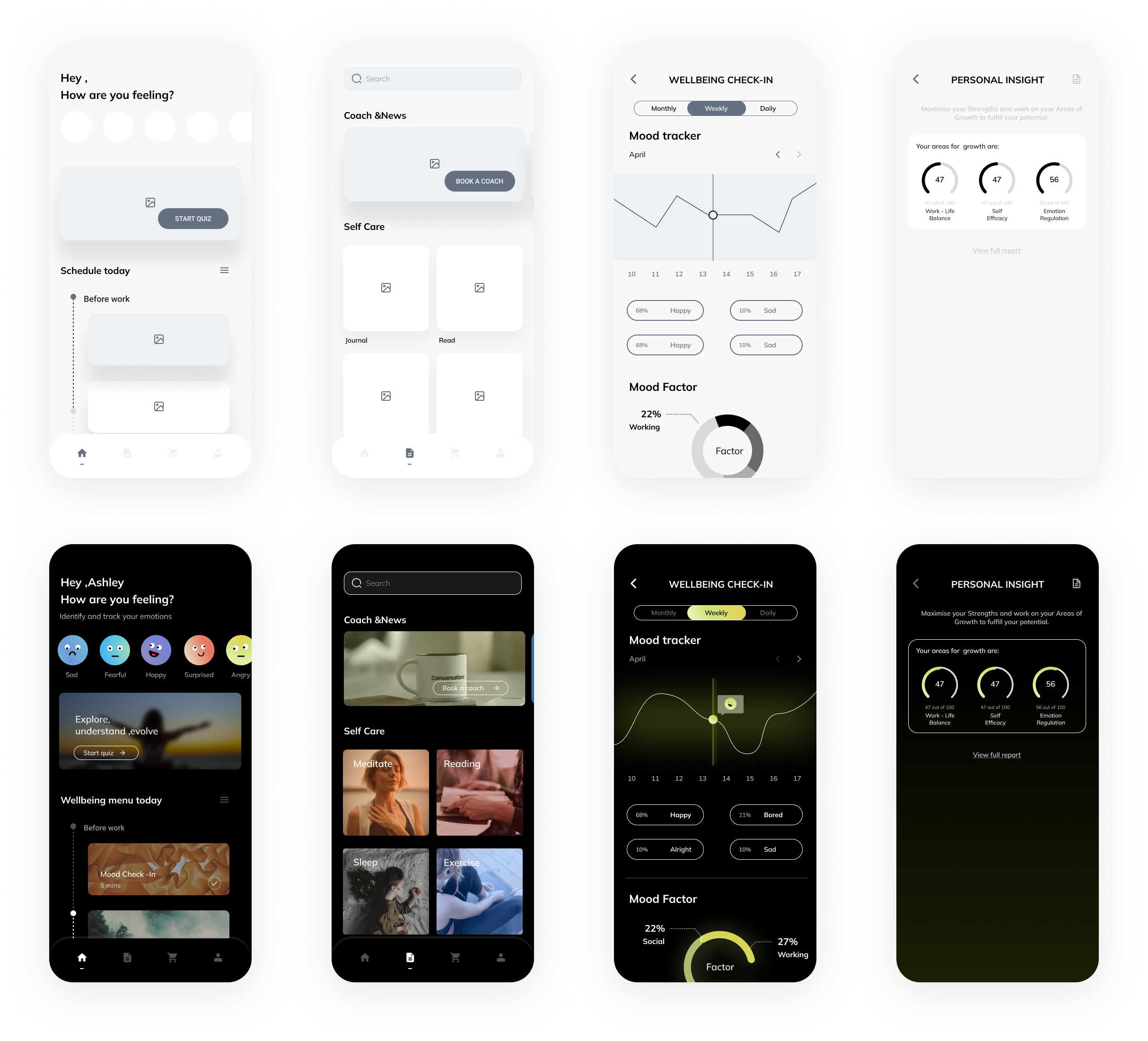
Low-fi → High-fi
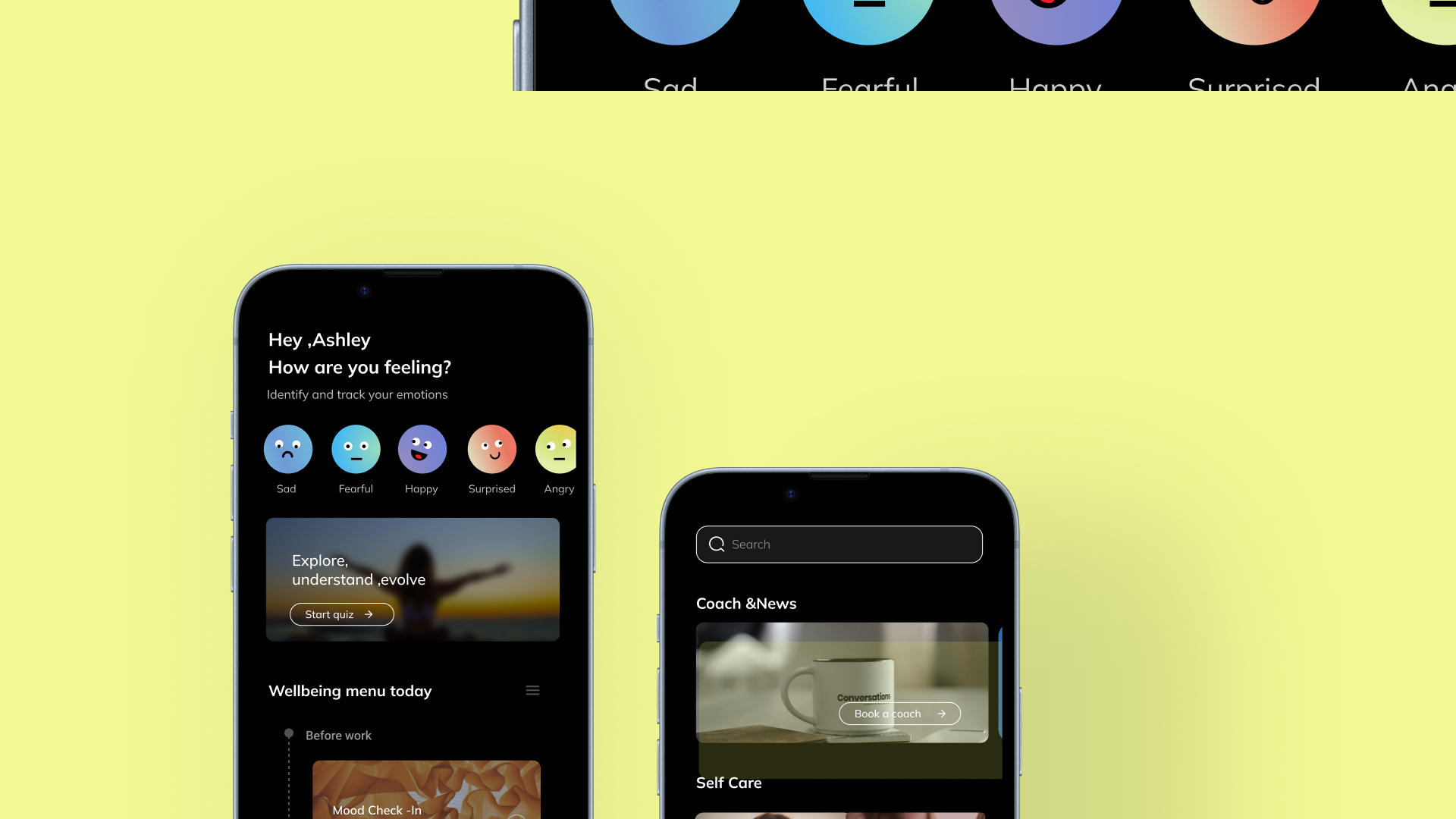
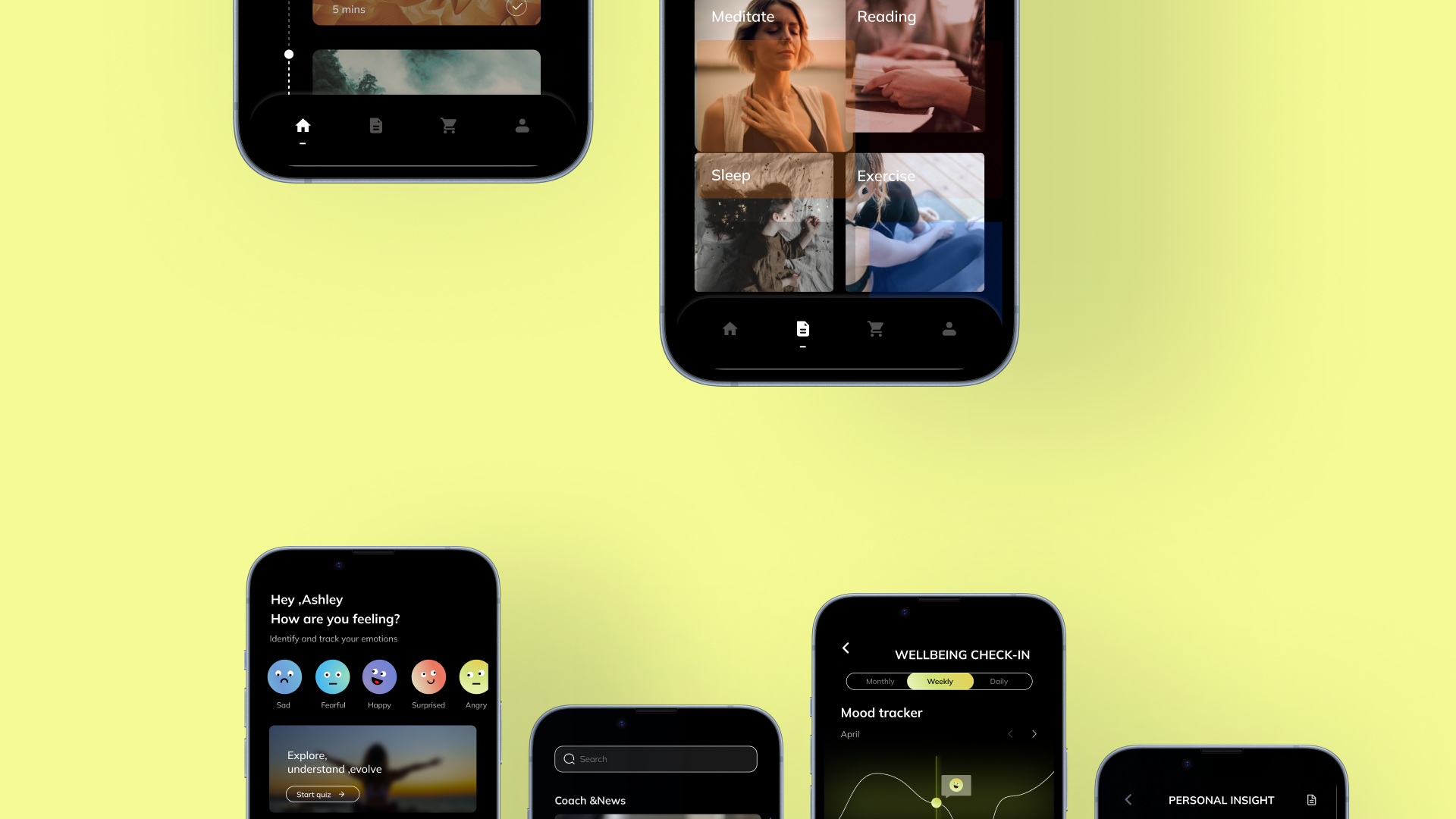
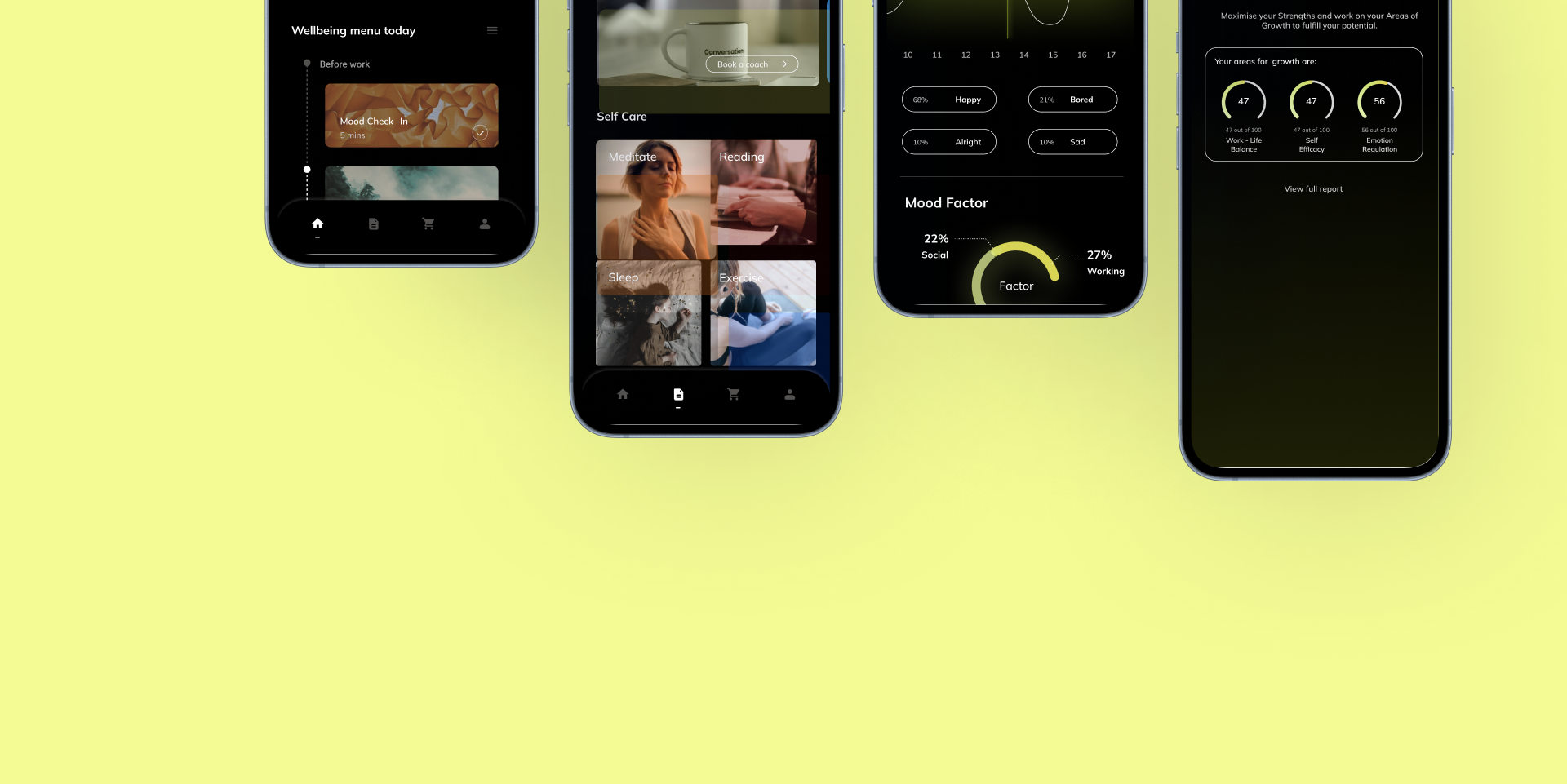
A few key high-fidelity screens are shown here
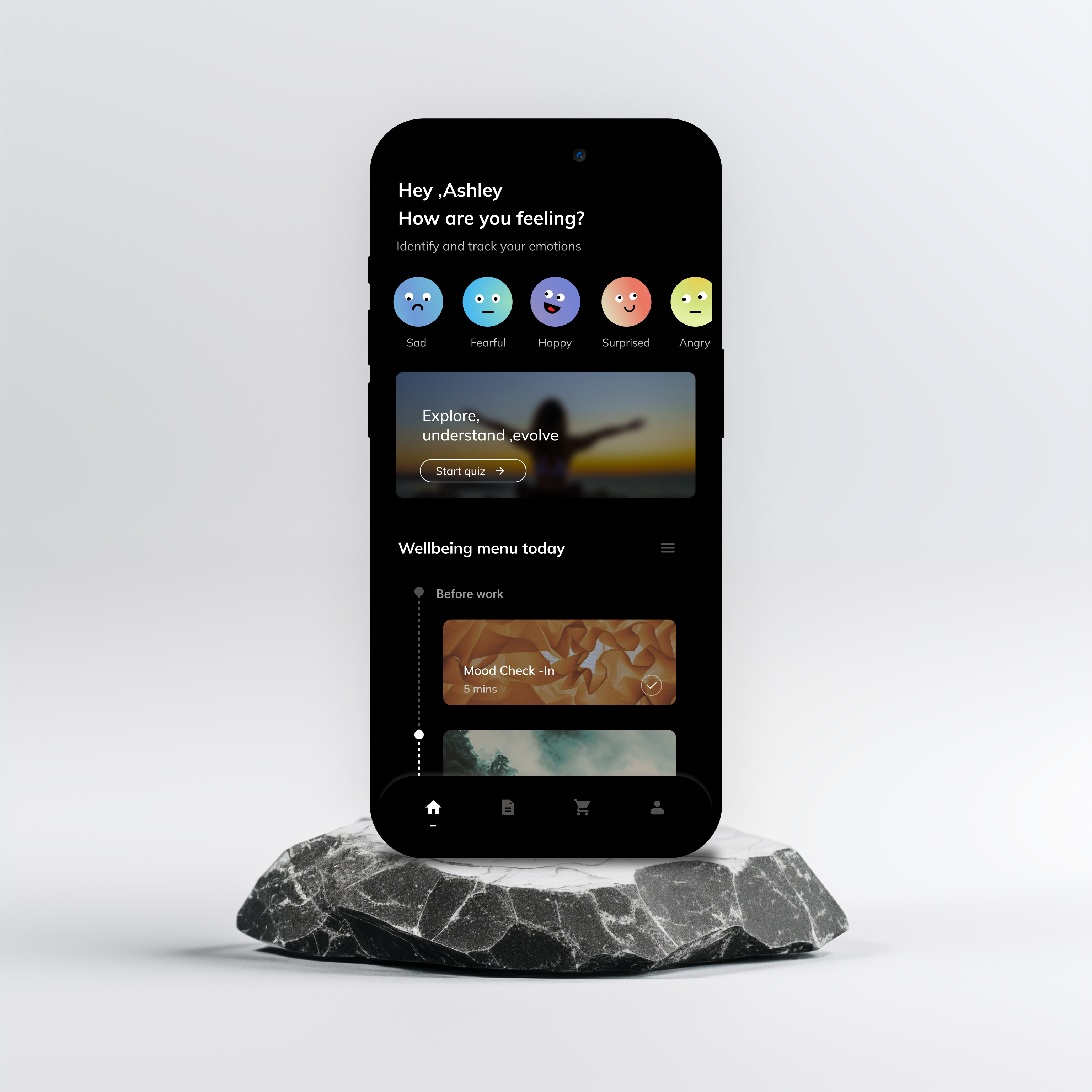
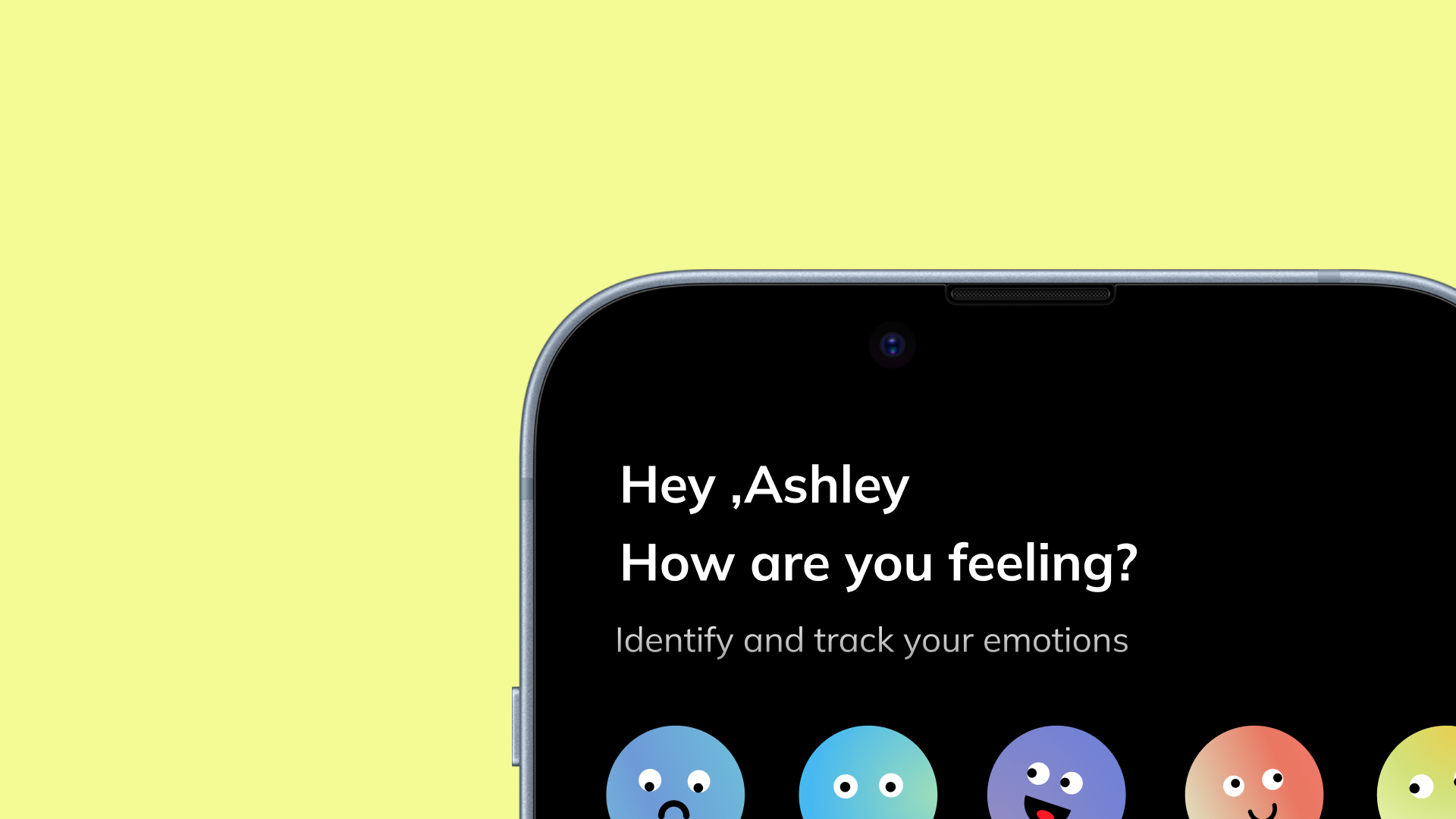
- home page
- self-care page
- mood check-in results page
- personal insights page
Outcome & Next steps
Because of time limits in the incubation program, we have not yet run formal usability testing, and the dashboard design is still in progress.
If I continue this project, my next steps will be:
- Plan and run task-based usability tests with employees and HR managers to validate the core flows.
- Iterate on the employee app based on feedback (navigation, content tone, visual clarity).
- Finish and refine the organisation dashboard, including:
- Talking to coaches and behavioral experts to find out the key metrics and trends for employee well-being
- Filters by team/time period
- Simple data stories that HR can present to management.
What I learned
I learned how to connect business assumptions (target, pricing, revenue model) with UX decisions, instead of only focusing on nice screens.I practiced using competitor analysis and value propositions to position the product, not just to make “nice screens”Working in a startup-like environment taught me to work with incomplete information, prioritise quickly, and communicate closely with the team.